Publications
Peer-reviewed papers, conference publications, and preprints, updated through 2026.
No publications match these filters.
2026
-
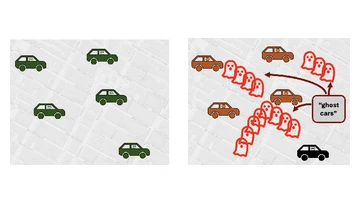 Digital Eyes on the Road: Using Street Cameras to Verify Traffic Integrity and Detect Sybil Attacks at City ScaleJhonatan Tavori, Mehmet Kerem Turkcan, Zoran Kostic, Salvatore Stolfo, and Gil ZussmanIn Proceedings of the USENIX Symposium on Vehicle Security and Privacy, Aug 2026To appear
This paper uses street-camera observations to verify traffic integrity and detect Sybil attacks at city scale.
@inproceedings{tavori2026digitaleyes, title = {Digital Eyes on the Road: Using Street Cameras to Verify Traffic Integrity and Detect Sybil Attacks at City Scale}, author = {Tavori, Jhonatan and Turkcan, Mehmet Kerem and Kostic, Zoran and Stolfo, Salvatore and Zussman, Gil}, booktitle = {Proceedings of the USENIX Symposium on Vehicle Security and Privacy}, year = {2026}, month = aug, note = {To appear}, } -
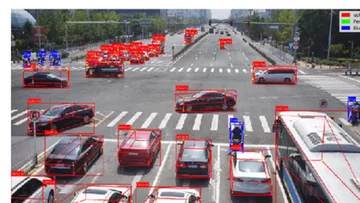 Calibration-Free View-Agnostic Monocular 3D Object Detection for Urban ScenesMehmet Kerem Turkcan, Devika Gumaste, and Zoran KosticIn Proceedings of the IEEE/CVF Conference on Computer Vision and Pattern Recognition Workshops, Jun 2026
UrbanOmniDetect is a calibration-free monocular 3D object detection framework for heterogeneous urban cameras across ego-vehicle, infrastructure, and aerial viewpoints.
@inproceedings{turkcan2026urbanomnidetect, title = {Calibration-Free View-Agnostic Monocular 3D Object Detection for Urban Scenes}, author = {Turkcan, Mehmet Kerem and Gumaste, Devika and Kostic, Zoran}, booktitle = {Proceedings of the IEEE/CVF Conference on Computer Vision and Pattern Recognition Workshops}, month = jun, year = {2026}, pages = {786--795}, } -
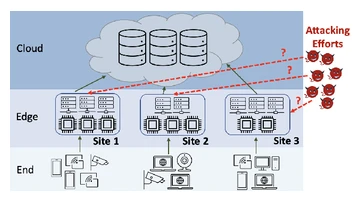 Worst-Case Attacks in Reactive Edge-Cloud Systems: Expected Latency and SLA ViolationJhonatan Tavori, Mehmet Kerem Turkcan, Zoran Kostic, Javad Ghaderi, and Gil ZussmanIn IEEE INFOCOM 2026 - IEEE Conference on Computer Communications, May 2026
This work analyzes worst-case attacks in reactive edge-cloud systems, deriving expected latency and SLA-violation behavior for adversarial load patterns.
@inproceedings{tavori2026worstcase, title = {Worst-Case Attacks in Reactive Edge-Cloud Systems: Expected Latency and SLA Violation}, author = {Tavori, Jhonatan and Turkcan, Mehmet Kerem and Kostic, Zoran and Ghaderi, Javad and Zussman, Gil}, booktitle = {IEEE INFOCOM 2026 - IEEE Conference on Computer Communications}, year = {2026}, month = may, pages = {1--10}, keywords = {Clouds; Equations; Modeling; Timing; Printing; Arrays; Probability; Stars; Servers; Delays; Edge-Cloud Computing; Worst-Case Attacks; Convexity Analysis; Network Security}, doi = {10.1109/INFOCOM59046.2026.11571607}, } -
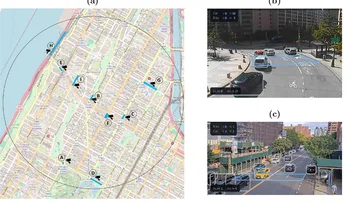 Harnessing Floating Car Data, Traffic Camera Observations, and Network Flow Analysis for Traffic Volume EstimationAntonina Kosikova, Mehmet Kerem Turkcan, Ahmed Darrat, and Andrew SmythMay 2026
This work fuses floating car trajectory data, municipal traffic camera observations, cellular transmission model features, graph neural networks, and ensemble square-root filtering to estimate and forecast network-wide traffic volumes.
@misc{kosikova2026trafficvolume, title = {Harnessing Floating Car Data, Traffic Camera Observations, and Network Flow Analysis for Traffic Volume Estimation}, author = {Kosikova, Antonina and Turkcan, Mehmet Kerem and Darrat, Ahmed and Smyth, Andrew}, year = {2026}, month = may, eprint = {2605.09891}, archiveprefix = {arXiv}, primaryclass = {eess.SY}, doi = {10.48550/arXiv.2605.09891}, } -
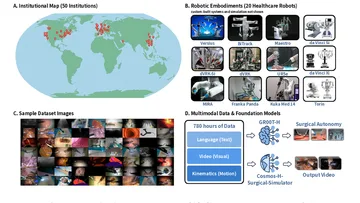 Open-H-Embodiment: A Large-Scale Dataset for Enabling Foundation Models in Medical RoboticsNigel Nelson, Juo-Tung Chen, Jesse Haworth, Xinhao Chen, Lukas Zbinden, Dianye Huang, Mattia Ballo, Filippo Filicori, Mehmet Kerem Turkcan, and othersApr 2026
Open-H-Embodiment is a multi-institution open dataset for medical robot learning with synchronized video and kinematics across healthcare robotic platforms, enabling foundation models and world models for medical robotics.
@misc{openh2026, title = {Open-H-Embodiment: A Large-Scale Dataset for Enabling Foundation Models in Medical Robotics}, author = {Nelson, Nigel and Chen, Juo-Tung and Haworth, Jesse and Chen, Xinhao and Zbinden, Lukas and Huang, Dianye and Ballo, Mattia and Filicori, Filippo and Turkcan, Mehmet Kerem and others}, year = {2026}, month = apr, eprint = {2604.21017}, archiveprefix = {arXiv}, primaryclass = {cs.RO}, doi = {10.48550/arXiv.2604.21017}, } -
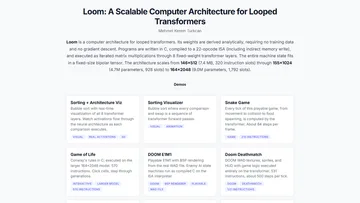 Loom: A Scalable Analytical Neural Computer ArchitectureMehmet Kerem TurkcanApr 2026
Loom is a looped transformer computer with analytically derived fixed weights, a compiled instruction path, ONNX browser demos, Hugging Face model assets, and FPGA verification.
@misc{turkcan2026loom, title = {Loom: A Scalable Analytical Neural Computer Architecture}, author = {Turkcan, Mehmet Kerem}, year = {2026}, month = apr, eprint = {2604.08816}, archiveprefix = {arXiv}, primaryclass = {cs.LG}, doi = {10.48550/arXiv.2604.08816}, } -
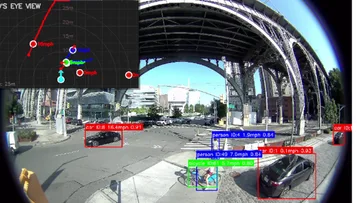 A Real-Time Bike-Pedestrian Safety System with Wide-Angle Perception and Evaluation Testbed for Urban IntersectionsMehmet Kerem TurkcanApr 2026
This work presents a real-time bike-pedestrian warning system using fisheye perception, edge inference, ground-plane projection, scenario-based conformance testing, and deployment-oriented evaluation.
@misc{turkcan2026bikeped, title = {A Real-Time Bike-Pedestrian Safety System with Wide-Angle Perception and Evaluation Testbed for Urban Intersections}, author = {Turkcan, Mehmet Kerem}, year = {2026}, month = apr, eprint = {2604.17046}, archiveprefix = {arXiv}, primaryclass = {cs.CV}, doi = {10.48550/arXiv.2604.17046}, } -
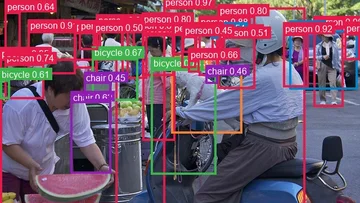 Detect Anything in Real Time: From Single-Prompt Segmentation to Multi-Class DetectionMehmet Kerem TurkcanMar 2026
DART is a training-free framework that converts a promptable frontier vision model into a real-time multi-class open-vocabulary detector by sharing class-agnostic visual backbone computation, batching decoding, and optimizing inference for deployment.
@misc{turkcan2026dart, title = {Detect Anything in Real Time: From Single-Prompt Segmentation to Multi-Class Detection}, author = {Turkcan, Mehmet Kerem}, year = {2026}, month = mar, eprint = {2603.11441}, archiveprefix = {arXiv}, primaryclass = {cs.CV}, doi = {10.48550/arXiv.2603.11441}, } -
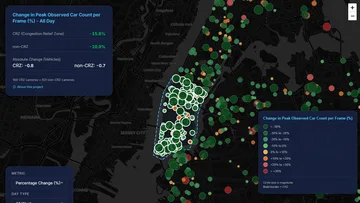 A Vision-Based Analysis of Congestion Pricing in New York CityMehmet Kerem Turkcan, Jhonatan Tavori, Javad Ghaderi, Gil Zussman, Zoran Kostic, and Andrew SmythFeb 2026
This work analyzes New York City’s congestion-pricing rollout using automated computer vision measurements from public traffic camera data before and after the January 2025 policy implementation.
@misc{turkcan2026congestionpricing, title = {A Vision-Based Analysis of Congestion Pricing in New York City}, author = {Turkcan, Mehmet Kerem and Tavori, Jhonatan and Ghaderi, Javad and Zussman, Gil and Kostic, Zoran and Smyth, Andrew}, year = {2026}, month = feb, eprint = {2602.03015}, archiveprefix = {arXiv}, primaryclass = {cs.CV}, doi = {10.48550/arXiv.2602.03015}, } -
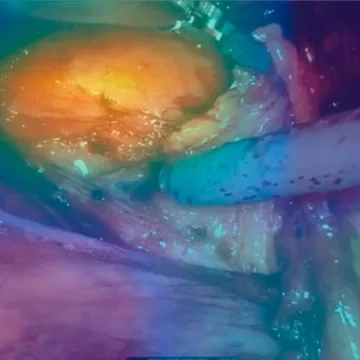 Computer Vision Scoring of Endoscopically Traced Line Figures in an Inanimate Scope Tip Coordination Training ModelNeil Mitra, Sanjeev Narasimhan, Mehmet Kerem Turkcan, Zoran Kostic, Yi-Ru Chen, Sarah Choksi, Elizabeth Nilsson-Sjolander, Pablo Palacios, Katie Carsky, Alya Riaz, Filippo Filicori, and Richard L WhelanSurgical Endoscopy, Jan 2026
This work applies computer vision to automated scoring of endoscopy training tracings for objective skill assessment.
@article{mitra2026computer,
  title = {Computer Vision Scoring of Endoscopically Traced Line Figures in an Inanimate Scope Tip Coordination Training Model},
  author = {Mitra, Neil and Narasimhan, Sanjeev and Turkcan, Mehmet Kerem and Kostic, Zoran and Chen, Yi-Ru and Choksi, Sarah and Nilsson-Sjolander, Elizabeth and Palacios, Pablo and Carsky, Katie and Riaz, Alya and Filicori, Filippo and Whelan, Richard L},
  journal = {Surgical Endoscopy},
  volume = {40},
  number = {1},
  pages = {657--664},
  year = {2026},
  month = jan,
  doi = {10.1007/s00464-025-12354-4},
}
2025
-
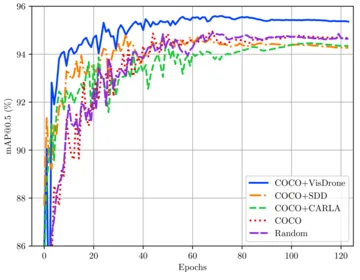 Adaptive Data Collection for Robust Learning Across Multiple DistributionsChengbo Zang, Mehmet Kerem Turkcan, Gil Zussman, Zoran Kostic, and Javad GhaderiIn Proceedings of the 42nd International Conference on Machine Learning, Jul 2025
This work combines upper-confidence-bound sampling with online gradient descent to adaptively collect and annotate data across multiple sources for robust learning under a fixed data budget.
@inproceedings{zang2025adaptive, title = {Adaptive Data Collection for Robust Learning Across Multiple Distributions}, author = {Zang, Chengbo and Turkcan, Mehmet Kerem and Zussman, Gil and Kostic, Zoran and Ghaderi, Javad}, booktitle = {Proceedings of the 42nd International Conference on Machine Learning}, series = {Proceedings of Machine Learning Research}, volume = {267}, pages = {73974--73994}, year = {2025}, month = jul, publisher = {PMLR}, } -
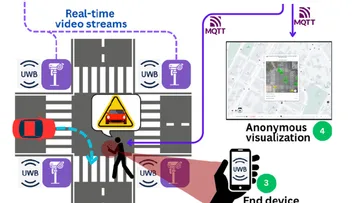 Real-Time Video Analytics for Urban Safety: Deployment over Edge and End DevicesMahshid Ghasemi, Yongjie Fu, Xinyu Ouyang, Peiran Wang, Mehmet Kerem Turkcan, Jhonatan Tavori, Sofia Kleisarchaki, Thomas Calmant, Levent Gurgen, Zoran Kostic, Xuan Di, Gil Zussman, and Javad GhaderiIn Proceedings of the Tenth ACM/IEEE Symposium on Edge Computing, 2025Best Paper Award
PAVE is a privacy-preserving real-time video analytics system that uses edge and end-device processing to support pedestrian safety at urban intersections.
@inproceedings{ghasemi2025realtime, title = {Real-Time Video Analytics for Urban Safety: Deployment over Edge and End Devices}, author = {Ghasemi, Mahshid and Fu, Yongjie and Ouyang, Xinyu and Wang, Peiran and Turkcan, Mehmet Kerem and Tavori, Jhonatan and Kleisarchaki, Sofia and Calmant, Thomas and Gurgen, Levent and Kostic, Zoran and Di, Xuan and Zussman, Gil and Ghaderi, Javad}, booktitle = {Proceedings of the Tenth ACM/IEEE Symposium on Edge Computing}, year = {2025}, pages = {14:1--14:17}, note = {Best Paper Award}, doi = {10.1145/3769102.3770618}, } -
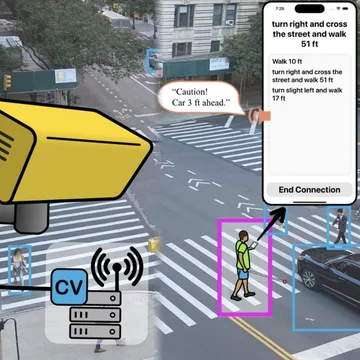 Distributed VLMs: Efficient Vision-Language Processing through Cloud-Edge CollaborationYuyang Li, Devika Gumaste, Mehmet Kerem Turkcan, Javad Ghaderi, Gil Zussman, and Zoran KosticIn 2025 IEEE International Conference on Pervasive Computing and Communications Workshops and Other Affiliated Events, 2025
This paper partitions vision-language model computation between edge devices and central servers to improve throughput and responsiveness without compressing the underlying model.
@inproceedings{li2025distributed, title = {Distributed VLMs: Efficient Vision-Language Processing through Cloud-Edge Collaboration}, author = {Li, Yuyang and Gumaste, Devika and Turkcan, Mehmet Kerem and Ghaderi, Javad and Zussman, Gil and Kostic, Zoran}, booktitle = {2025 IEEE International Conference on Pervasive Computing and Communications Workshops and Other Affiliated Events}, pages = {280--286}, year = {2025}, doi = {10.1109/PerComWorkshops65533.2025.00078}, } -
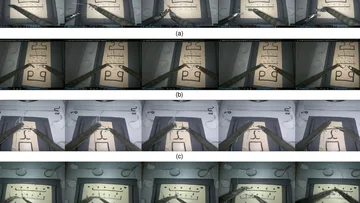 Towards Suturing World Models: Learning Predictive Models for Robotic Surgical TasksMehmet Kerem Turkcan, Mattia Ballo, Filippo Filicori, and Zoran Kostic2025
This work fine-tunes video diffusion models on annotated surgical suturing demonstrations to model ideal and non-ideal fine-grained robotic surgical actions.
@misc{turkcan2025suturing, title = {Towards Suturing World Models: Learning Predictive Models for Robotic Surgical Tasks}, author = {Turkcan, Mehmet Kerem and Ballo, Mattia and Filicori, Filippo and Kostic, Zoran}, year = {2025}, eprint = {2503.12531}, archiveprefix = {arXiv}, primaryclass = {cs.CV}, doi = {10.48550/arXiv.2503.12531}, } -
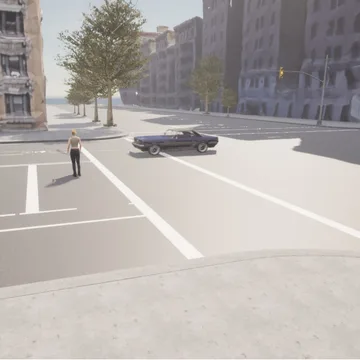 AI-Powered CPS-Enabled Urban Transportation Digital Twin: Methods and ApplicationsYongjie Fu, Mehmet Kerem Turkcan, Mahshid Ghasemi, Zhaobin Mo, Chengbo Zang, Abhishek Adhikari, Zoran Kostic, Gil Zussman, and Xuan Di2025
This preprint describes an AI-powered cyber-physical digital twin architecture for urban transportation, including methods and applications for intelligent intersections.
@misc{fu2025aipowered, title = {AI-Powered CPS-Enabled Urban Transportation Digital Twin: Methods and Applications}, author = {Fu, Yongjie and Turkcan, Mehmet Kerem and Ghasemi, Mahshid and Mo, Zhaobin and Zang, Chengbo and Adhikari, Abhishek and Kostic, Zoran and Zussman, Gil and Di, Xuan}, year = {2025}, eprint = {2501.10396}, archiveprefix = {arXiv}, primaryclass = {eess.SY}, doi = {10.48550/arXiv.2501.10396}, } -
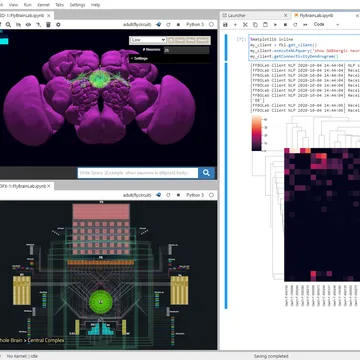 Loosely Coupled Oscillators as a Correlate of Behavioral Control Circuits Within the Central Complex of the Fruit FlySaul Garnell, Mehmet Kerem Turkcan, Maryam Doborjeh, Brian H Smith, and Paul SzyszkaIn Neural Information Processing, 2025
This work models fly sleep and arousal control circuits as loosely coupled oscillators using connectome-driven simulation.
@inproceedings{garnell2025loosely,
  title = {Loosely Coupled Oscillators as a Correlate of Behavioral Control Circuits Within the Central Complex of the Fruit Fly},
  author = {Garnell, Saul and Turkcan, Mehmet Kerem and Doborjeh, Maryam and Smith, Brian H and Szyszka, Paul},
  booktitle = {Neural Information Processing},
  series = {Lecture Notes in Computer Science},
  pages = {226--240},
  year = {2025},
  doi = {10.1007/978-981-96-6576-1_16},
}
2024
-
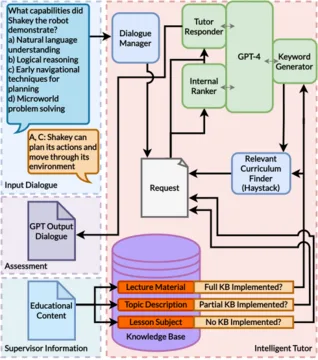 Examining the Influence of Varied Levels of Domain Knowledge Base Inclusion in GPT-based Intelligent TutorsBlake Castleman, and Mehmet Kerem TurkcanIn Proceedings of the 17th International Conference on Educational Data Mining, Jul 2024
Recent advancements in large language models (LLMs) have facilitated the development of chatbots with sophisticated conversational capabilities. However, LLMs exhibit frequent inaccurate responses to queries, hindering applications in educational settings. In this paper, we investigate the effectiveness of integrating a knowledge base (KB) with LLM intelligent tutors to increase response reliability. To achieve this, we design a scaleable KB that affords educational supervisors seamless integration of lesson curricula, which is automatically processed by the intelligent tutoring system. We then detail an evaluation, where student participants were presented with questions about the artificial intelligence curriculum to respond to. GPT-4 intelligent tutors with varying hierarchies of KB access and human domain experts then assessed these responses. Lastly, students cross-examined the intelligent tutors’ responses to the domain experts’ and ranked their various pedagogical abilities. Results suggest that, although these intelligent tutors still demonstrate a lower accuracy compared to domain experts, the accuracy of the intelligent tutors increases when access to a KB is granted. We also observe that the intelligent tutors with KB access exhibit better pedagogical abilities to speak like a teacher and understand students than those of domain experts, while their ability to help students remains lagging behind domain experts.
@inproceedings{2024.EDM-posters.68, address = {Atlanta, Georgia, USA}, author = {Castleman, Blake and Turkcan, Mehmet Kerem}, booktitle = {Proceedings of the 17th International Conference on Educational Data Mining}, doi = {10.5281/zenodo.12729908}, editor = {Paaßen, Benjamin and Epp, Carrie Demmans}, isbn = {978-1-7336736-5-5}, month = jul, pages = {649--657}, publisher = {International Educational Data Mining Society}, title = {Examining the Influence of Varied Levels of Domain Knowledge Base Inclusion in GPT-based Intelligent Tutors}, year = {2024}, } - StreetNav: Leveraging street cameras to support precise outdoor navigation for blind pedestriansGaurav Jain, Basel Hindi, Zihao Zhang, Koushik Srinivasula, Mingyu Xie, Mahshid Ghasemi, Daniel Weiner, Sophie Ana Paris, Xin Yi Therese Xu, Michael Malcolm, and othersIn Proceedings of the 37th Annual ACM Symposium on User Interface Software and Technology, 2024
Blind and low-vision (BLV) people rely on GPS-based systems for outdoor navigation. GPS’s inaccuracy, however, causes them to veer off track, run into obstacles, and struggle to reach precise destinations. While prior work has made precise navigation possible indoors via hardware installations, enabling this outdoors remains a challenge. Interestingly, many outdoor environments are already instrumented with hardware such as street cameras. In this work, we explore the idea of repurposing existing street cameras for outdoor navigation. Our community-driven approach considers both technical and sociotechnical concerns through engagements with various stakeholders: BLV users, residents, business owners, and Community Board leadership. The resulting system, StreetNav, processes a camera’s video feed using computer vision and gives BLV pedestrians real-time navigation assistance. Our evaluations show that StreetNav guides users more precisely than GPS, but its technical performance is sensitive to environmental occlusions and distance from the camera. We discuss future implications for deploying such systems at scale.
@inproceedings{jain2024streetnav, title = {StreetNav: Leveraging street cameras to support precise outdoor navigation for blind pedestrians}, author = {Jain, Gaurav and Hindi, Basel and Zhang, Zihao and Srinivasula, Koushik and Xie, Mingyu and Ghasemi, Mahshid and Weiner, Daniel and Paris, Sophie Ana and Xu, Xin Yi Therese and Malcolm, Michael and others}, booktitle = {Proceedings of the 37th Annual ACM Symposium on User Interface Software and Technology}, pages = {1--21}, year = {2024}, doi = {10.1145/3654777} } -
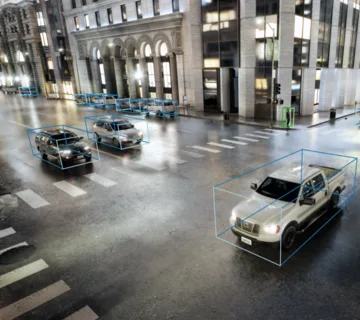 Boundless: Generating Photorealistic Synthetic Data for Object Detection in Urban StreetscapesMehmet Kerem Turkcan, Yuyang Li, Chengbo Zang, Javad Ghaderi, Gil Zussman, and Zoran Kostic2024
We introduce Boundless, a photo-realistic synthetic data generation system for enabling highly accurate object detection in dense urban streetscapes. Boundless can replace massive real-world data collection and manual ground-truth object annotation (labeling) with an automated and configurable process. Boundless is based on the Unreal Engine 5 (UE5) City Sample project with improvements enabling accurate collection of 3D bounding boxes across different lighting and scene variability conditions. We evaluate the performance of object detection models trained on the dataset generated by Boundless when used for inference on a real-world dataset acquired from medium-altitude cameras. We compare the performance of the Boundless-trained model against the CARLA-trained model and observe an improvement of 7.8 mAP. The results we achieved support the premise that synthetic data generation is a credible methodology for training/fine-tuning scalable object detection models for urban scenes.
@misc{turkcan2024boundlessgeneratingphotorealisticsynthetic, title = {Boundless: Generating Photorealistic Synthetic Data for Object Detection in Urban Streetscapes}, author = {Turkcan, Mehmet Kerem and Li, Yuyang and Zang, Chengbo and Ghaderi, Javad and Zussman, Gil and Kostic, Zoran}, year = {2024}, eprint = {2409.03022}, archiveprefix = {arXiv}, primaryclass = {cs.CV}, url = {https://arxiv.org/abs/2409.03022}, doi = {10.48550/arXiv.2409.03022}, } -
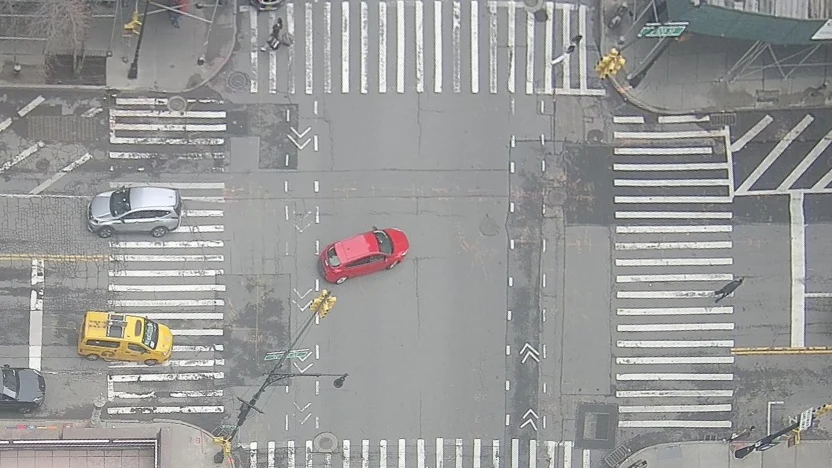 Constellation Dataset: Benchmarking High-Altitude Object Detection for an Urban IntersectionMehmet Kerem Turkcan, Sanjeev Narasimhan, Chengbo Zang, Gyung Hyun Je, Bo Yu, Mahshid Ghasemi, Javad Ghaderi, Gil Zussman, and Zoran Kostic2024
We introduce Constellation, a dataset of 13K images suitable for research on detection of objects in dense urban streetscapes observed from high-elevation cameras, collected for a variety of temporal conditions. The dataset addresses the need for curated data to explore problems in small object detection exemplified by the limited pixel footprint of pedestrians observed tens of meters from above. It enables the testing of object detection models for variations in lighting, building shadows, weather, and scene dynamics. We evaluate contemporary object detection architectures on the dataset, observing that state-of-the-art methods have lower performance in detecting small pedestrians compared to vehicles, corresponding to a 10% difference in average precision (AP). Using structurally similar datasets for pretraining the models results in an increase of 1.8% mean AP (mAP). We further find that incorporating domain-specific data augmentations helps improve model performance. Using pseudo-labeled data, obtained from inference outcomes of the best-performing models, improves the performance of the models. Finally, comparing the models trained using the data collected in two different time intervals, we find a performance drift in models due to the changes in intersection conditions over time. The best-performing model achieves a pedestrian AP of 92.0% with 11.5 ms inference time on NVIDIA A100 GPUs, and an mAP of 95.4%.
@misc{turkcan2024constellationdatasetbenchmarkinghighaltitude, title = {Constellation Dataset: Benchmarking High-Altitude Object Detection for an Urban Intersection}, author = {Turkcan, Mehmet Kerem and Narasimhan, Sanjeev and Zang, Chengbo and Je, Gyung Hyun and Yu, Bo and Ghasemi, Mahshid and Ghaderi, Javad and Zussman, Gil and Kostic, Zoran}, year = {2024}, eprint = {2404.16944}, archiveprefix = {arXiv}, primaryclass = {cs.CV}, url = {https://arxiv.org/abs/2404.16944}, doi = {10.48550/arXiv.2404.16944}, } - Digital twin for pedestrian safety warning at a single urban traffic intersectionYongjie Fu, Mehmet Kerem Turkcan, Vikram Anantha, Zoran Kostic, Gil Zussman, and Xuan DiIn 2024 IEEE Intelligent Vehicles Symposium (IV), 2024
Ensuring the safety of Vulnerable Road Users (VRUs) at intersections is crucial to enhancing urban traffic systems. This paper introduces a novel intelligent warning system specifically designed to increase the safety of VRUs crossing intersections. The proposed system leverages the COSMOS testbed to obtain real time vehicle information and employs Message Queuing Telemetry Transport (MQTT) as a standards-based messaging protocol for device communication and data transmission and utilizes a transformer model and Time To Collision (TTC) method to predict the collision. To validate the effectiveness and reliability of our intelligent alert system, we conducted comprehensive tests using the CARLA simulator, incorporating hardware in the loop simulation approach. The results demonstrate the potential for increased situational awareness and reduced risk factors associated with VRUs at intersections. Our work supports the integration of this intelligent alert system as a viable solution for reducing accidents and enhancing the overall safety of urban intersections in real time.
@inproceedings{fu2024digital,
  title = {Digital twin for pedestrian safety warning at a single urban traffic intersection},
  author = {Fu, Yongjie and Turkcan, Mehmet Kerem and Anantha, Vikram and Kostic, Zoran and Zussman, Gil and Di, Xuan},
  booktitle = {2024 IEEE Intelligent Vehicles Symposium (IV)},
  pages = {2640--2645},
  year = {2024},
  organization = {IEEE},
  doi = {10.1109/IV55156.2024.10588544},
}
2023
-
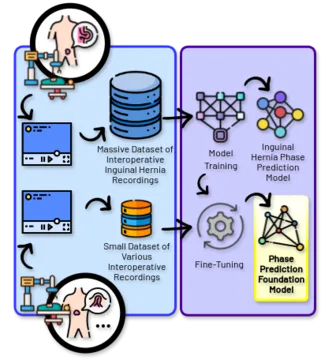 Optimizing Computer Vision in Surgery Workflows Through Transfer LearningMehmet Kerem Turkcan, Sarah Choksi, Daniel P. Bitner, Skyler Szot, Chengbo Zang, Filippo Filicori, and Zoran KosticIn American College of Surgeons Clinical Congress 2023, Oct 2023
@inproceedings{2023b, author = {Turkcan, Mehmet Kerem and Choksi, Sarah and Bitner, Daniel P. and Szot, Skyler and Zang, Chengbo and Filicori, Filippo and Kostic, Zoran}, title = {Optimizing Computer Vision in Surgery Workflows Through Transfer Learning}, booktitle = {American College of Surgeons Clinical Congress 2023}, year = {2023}, address = {Boston, MA.}, month = oct, } - Surgical Phase Recognition in Inguinal Hernia Repair—AI-Based Confirmatory Baseline and Exploration of Competitive ModelsChengbo Zang, Mehmet Kerem Turkcan, Sanjeev Narasimhan, Yuqing Cao, Kaan Yarali, Zixuan Xiang, Skyler Szot, Feroz Ahmad, Sarah Choksi, Daniel P Bitner, and othersBioengineering, 2023
Video-recorded robotic-assisted surgeries allow the use of automated computer vision and artificial intelligence/deep learning methods for quality assessment and workflow analysis in surgical phase recognition. We considered a dataset of 209 videos of robotic-assisted laparoscopic inguinal hernia repair (RALIHR) collected from 8 surgeons, defined rigorous ground-truth annotation rules, then pre-processed and annotated the videos. We deployed seven deep learning models to establish the baseline accuracy for surgical phase recognition and explored four advanced architectures. For rapid execution of the studies, we initially engaged three dozen MS-level engineering students in a competitive classroom setting, followed by focused research. We unified the data processing pipeline in a confirmatory study, and explored a number of scenarios which differ in how the DL networks were trained and evaluated. For the scenario with 21 validation videos of all surgeons, the Video Swin Transformer model achieved 0.85 validation accuracy, and the Perceiver IO model achieved 0.84. Our studies affirm the necessity of close collaborative research between medical experts and engineers for developing automated surgical phase recognition models deployable in clinical settings.
@article{zang2023surgical, title = {Surgical Phase Recognition in Inguinal Hernia Repair—AI-Based Confirmatory Baseline and Exploration of Competitive Models}, author = {Zang, Chengbo and Turkcan, Mehmet Kerem and Narasimhan, Sanjeev and Cao, Yuqing and Yarali, Kaan and Xiang, Zixuan and Szot, Skyler and Ahmad, Feroz and Choksi, Sarah and Bitner, Daniel P and others}, journal = {Bioengineering}, volume = {10}, number = {6}, pages = {654}, year = {2023}, publisher = {MDPI}, doi = {10.3390/bioengineering10060654} } -
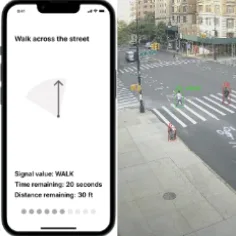 Towards Street Camera-based Outdoor Navigation for Blind PedestriansGaurav Jain, Basel Hindi, Mingyu Xie, Zihao Zhang, Koushik Srinivasula, Mahshid Ghasemi, Daniel Weiner, Xin Yi Therese Xu, Sophie Ana Paris, Chloe Tedjo, and othersIn Proceedings of the 25th International ACM SIGACCESS Conference on Computers and Accessibility, 2023
Blind and low-vision (BLV) people use GPS-based systems for outdoor navigation assistance, which provide instructions to get from one place to another. However, such systems do not provide users with real-time, precise information about their location and surroundings which is crucial for safe navigation. In this work, we investigate whether street cameras can be used to address aspects of navigation that BLV people still find challenging with existing GPS-based assistive technologies. We conducted formative interviews with six BLV participants to identify specific challenges they face in outdoor navigation. We discovered three main challenges: Anticipating environment layouts, avoiding obstacles while following directions, and crossing noisy street intersections. To address these challenges, we are currently developing a street camera-based navigation system that provides real-time auditory feedback to help BLV users avoid obstacles, know exactly when to cross the street, and understand the overall layout of the environment. We close by discussing our evaluation plan.
@inproceedings{jain2023towards, title = {Towards Street Camera-based Outdoor Navigation for Blind Pedestrians}, author = {Jain, Gaurav and Hindi, Basel and Xie, Mingyu and Zhang, Zihao and Srinivasula, Koushik and Ghasemi, Mahshid and Weiner, Daniel and Xu, Xin Yi Therese and Paris, Sophie Ana and Tedjo, Chloe and others}, booktitle = {Proceedings of the 25th International ACM SIGACCESS Conference on Computers and Accessibility}, pages = {1--6}, year = {2023}, doi = {10.1145/3597638.3614498} } -
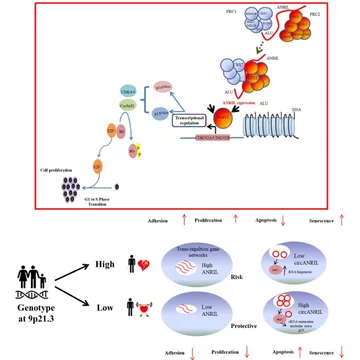 Severity of coronary artery disease is associated with diminished circANRIL expression: A possible blood based transcriptional biomarker in East AfricaGokce Akan, Evarist Nyawawa, Bashir Nyangasa, Mehmet Kerem Turkcan, Erasto Mbugi, Mohammed Janabi, and Fatmahan AtalarJournal of Cellular and Molecular Medicine, 2023
Antisense Noncoding RNA in the INK4 Locus (ANRIL) is the prime candidate gene at Chr9p21, the well‐defined genetic risk locus associated with coronary artery disease (CAD). ANRIL and its transcript variants were investigated for the susceptibility to CAD in adipose tissues (AT) and peripheral blood mononuclear cells (PBMCs) of the study group and the impact of 9p21.3 locus mutations was further analysed. Expressions of ANRIL, circANRIL (hsa_circ_0008574), NR003529, EU741058 and DQ485454 were detected in epicardial AT (EAT) mediastinal AT (MAT), subcutaneous AT (SAT) and PBMCs of CAD patients undergoing coronary artery bypass grafting and non‐CAD patients undergoing heart valve surgery. ANRIL expression was significantly upregulated, while the expression of circANRIL was significantly downregulated in CAD patients. Decreased circANRIL levels were significantly associated with the severity of CAD and correlated with aggressive clinical characteristics. rs10757278 and rs10811656 were significantly associated with ANRIL and circANRIL expressions in AT and PBMCs. The ROC‐curve analysis suggested that circANRIL has high diagnostic accuracy (AUC: 0.9808, cut‐off: 0.33, sensitivity: 1.0, specificity: 0.88). circANRIL has high diagnostic accuracy (AUC: 0.9808, cut‐off: 0.33, sensitivity: 1.0, specificity: 0.88). We report the first data demonstrating the presence of ANRIL and its transcript variants expressions in the AT and PBMCs of CAD patients. circANRIL having a synergetic effect with ANRIL plays a protective role in CAD pathogenesis. Therefore, altered circANRIL expression may become a potential diagnostic transcriptional biomarker for early CAD diagnosis.
@article{akan2023severity,
  title = {Severity of coronary artery disease is associated with diminished circANRIL expression: A possible blood based transcriptional biomarker in East Africa},
  author = {Akan, Gokce and Nyawawa, Evarist and Nyangasa, Bashir and Turkcan, Mehmet Kerem and Mbugi, Erasto and Janabi, Mohammed and Atalar, Fatmahan},
  journal = {Journal of Cellular and Molecular Medicine},
  year = {2023},
  doi = {10.1111/jcmm.18093}
}
2022
-
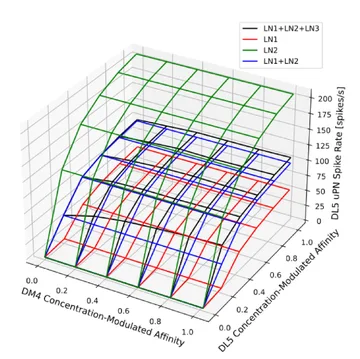 A Programmable Ontology Encompassing the Functional Logic of the Drosophila BrainMehmet Kerem Turkcan, Aurel A. Lazar, and Yiyin ZhouFrontiers in Neuroinformatics, Jun 2022
The Drosophila brain has only a fraction of the number of neurons of higher organisms such as mice and humans. Yet the sheer complexity of its neural circuits recently revealed by large connectomics datasets suggests that computationally modeling the function of fruit fly brain circuits at this scale poses significant challenges. To address these challenges, we present here a programmable ontology that expands the scope of the current Drosophila brain anatomy ontologies to encompass the functional logic of the fly brain. The programmable ontology provides a language not only for modeling circuit motifs but also for programmatically exploring their functional logic. To achieve this goal, we tightly integrated the programmable ontology with the workflow of the interactive FlyBrainLab computing platform. As part of the programmable ontology, we developed NeuroNLP++, a web application that supports free-form English queries for constructing functional brain circuits fully anchored on the available connectome/synaptome datasets, and the published worldwide literature. In addition, we present a methodology for including a model of the space of odorants into the programmable ontology, and for modeling olfactory sensory circuits of the antenna of the fruit fly brain that detect odorant sources. Furthermore, we describe a methodology for modeling the functional logic of the antennal lobe circuit consisting of a massive number of local feedback loops, a characteristic feature observed across Drosophila brain regions. Finally, using a circuit library, we demonstrate the power of our methodology for interactively exploring the functional logic of the massive number of feedback loops in the antennal lobe.
@article{lazar2022programmable, title = {A Programmable Ontology Encompassing the Functional Logic of the Drosophila Brain}, author = {Lazar, Aurel A and Turkcan, Mehmet Kerem and Zhou, Yiyin}, journal = {Frontiers in Neuroinformatics}, volume = {16}, pages = {853098}, year = {2022}, month = jun, publisher = {Frontiers}, doi = {10.3389/fninf.2022.853098}, } -
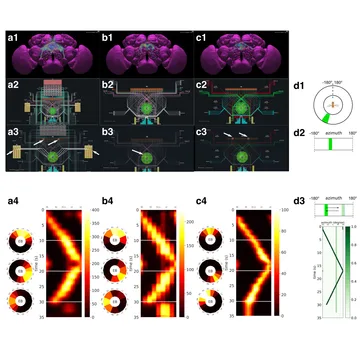 Sensory Processing and Associative Learning in Connectome-Based Neural CircuitsMehmet Kerem TurkcanColumbia University, 2022
@phdthesis{turkcan2022sensory, title = {Sensory Processing and Associative Learning in Connectome-Based Neural Circuits}, author = {Turkcan, Mehmet Kerem}, year = {2022}, school = {Columbia University}, doi = {10.7916/0h9a-z047} }
2021
- Accelerating with FlyBrainLab the discovery of the functional logic of the Drosophila brain in the connectomic and synaptomic eraMehmet Kerem Turkcan, Aurel A. Lazar, Tingkai Liu, and Yiyin ZhouElife, Mar 2021
In recent years, a wealth of Drosophila neuroscience data have become available including cell type and connectome/synaptome datasets for both the larva and adult fly. To facilitate integration across data modalities and to accelerate the understanding of the functional logic of the fruit fly brain, we have developed FlyBrainLab, a unique open-source computing platform that integrates 3D exploration and visualization of diverse datasets with interactive exploration of the functional logic of modeled executable brain circuits. FlyBrainLab’s User Interface, Utilities Libraries and Circuit Libraries bring together neuroanatomical, neurogenetic and electrophysiological datasets with computational models of different researchers for validation and comparison within the same platform. Seeking to transcend the limitations of the connectome/synaptome, FlyBrainLab also provides libraries for molecular transduction arising in sensory coding in vision/olfaction. Together with sensory neuron activity data, these libraries serve as entry points for the exploration, analysis, comparison, and evaluation of circuit functions of the fruit fly brain.
@article{lazar2021accelerating,
  title = {Accelerating with FlyBrainLab the discovery of the functional logic of the Drosophila brain in the connectomic and synaptomic era},
  author = {Lazar, Aurel A and Liu, Tingkai and Turkcan, Mehmet Kerem and Zhou, Yiyin},
  journal = {Elife},
  volume = {10},
  pages = {e62362},
  year = {2021},
  month = mar,
  publisher = {eLife Sciences Publications, Ltd},
  doi = {10.7554/eLife.62362},
}
2020
-
 Circulating lncRNA ANRIL a potential biomarker in Tanzanian patients with coronary artery diseaseG Akan, E Nyawawa, B Nyangasa, Mehmet Kerem Turkcan, E Mbugi, O Ozgen, M Janabi, and F AtalarIn European Journal of Human Genetics, 2020
@inproceedings{akan2020circulating, title = {Circulating lncRNA ANRIL a potential biomarker in Tanzanian patients with coronary artery disease}, author = {Akan, G and Nyawawa, E and Nyangasa, B and Turkcan, Mehmet Kerem and Mbugi, E and Ozgen, O and Janabi, M and Atalar, F}, booktitle = {European Journal of Human Genetics}, volume = {28}, number = {SUPPL 1}, pages = {264--264}, year = {2020}, organization = {SPRINGERNATURE CAMPUS, 4 CRINAN ST, LONDON, N1 9XW, ENGLAND}, doi = {10.1038/s41431-020-00739-z}, }
2019
-
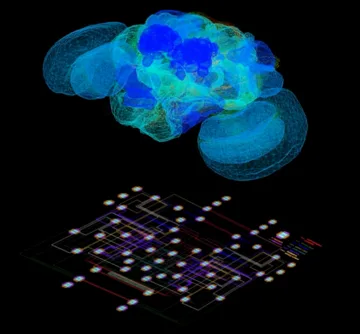 The Fruit Fly Brain Observatory: From Structure to FunctionMehmet Kerem Turkcan, Nikul H. Ukani, Chung-Heng Yeh, Adam Tomkins, Yiyin Zhou, Dorian Florescu, Carlos Luna Ortiz, Yu-Chi Huang, Cheng-Te Wang, Tingkai Liu, Paul Richmond, Chung-Chuan Lo, Daniel Coca, Ann-Shyn Chiang, and Aurel A. LazarBioRxiv, Mar 2019
The fruit fly is a key model organism for studying the activity of interconnected brain circuits. A large scattered global research community of neurobiologists and neurogeneticists, computational and theoretical neuroscientists, and computer scientists and engineers has been developing a vast trove of experimental and modeling data that has yet to be distilled into new knowledge and understanding of the functional logic of the brain. Developing open shared models, modelling tools and data repositories that can be accessed from anywhere in the world is the necessary engine for accelerating our understanding of how the brain works. To that end we developed the Fruit Fly Brain Observatory (FFBO), the next generation open-source platform to support open, collaborative Drosophila neuroscience research. FFBO provides a (i) hub for storing and integrating fruit fly brain research data from multiple data sources worldwide, (ii) unified repository of tools and methods to build, emulate and compare fruit fly brain models in health and disease, and (iii) an open framework for fruit fly brain data processing and model execution. FFBO provides access to application tools for visualizing, configuring, simulating and analyzing computational models of brain circuits of the (i) cell type map, (ii) connectome, (iii) synaptome, and (iv) activity map using intuitive queries in plain English. Tools are provided to extract the function inherent in these structural maps. All applications can be accessed with any modern browser.
@article{ukani2019fruit, title = {The Fruit Fly Brain Observatory: From Structure to Function}, author = {Ukani, Nikul H and Yeh, Chung-Heng and Tomkins, Adam and Zhou, Yiyin and Florescu, Dorian and Ortiz, Carlos Luna and Huang, Yu-Chi and Wang, Cheng-Te and Turkcan, Mehmet Kerem and Liu, Tingkai and Richmond, Paul and Lo, Chung-Chuan and Coca, Daniel and Chiang, Ann-Shyn and Lazar, Aurel A}, journal = {BioRxiv}, pages = {580290}, year = {2019}, month = mar, publisher = {Cold Spring Harbor Laboratory}, doi = {10.1101/580290}, } -
 Face-looking Image RecognitionMehmet Kerem Turkcan, Ege Çetın, and Tayfun AkgülIn 2019 27th Signal Processing and Communications Applications Conference (SIU), 2019
@inproceedings{turkcan2019face, title = {Face-looking Image Recognition}, author = {Turkcan, Mehmet Kerem and {\c{C}}et{\i}n, Ege and Akg{\"u}l, Tayfun}, booktitle = {2019 27th Signal Processing and Communications Applications Conference (SIU)}, pages = {1--4}, year = {2019}, organization = {IEEE}, doi = {10.1109/SIU.2019.8806499}, } -
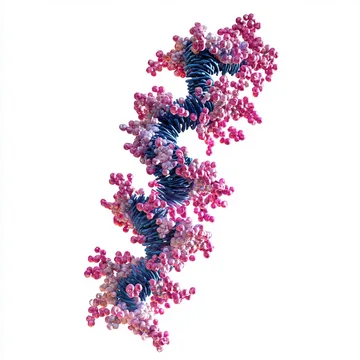 Intronic variants in the long non-coding RNA CDKN2B-AS1 are strongly associated with the risk of coronary artery disease in the Northern Tribes of TanzaniaGokce Akan, Peter Kisenge, Tulizo Shemu Sanga, Erasto Mbugi, Mehmet Kerem Turkcan, Mohammed Janabi, and Fatmahan AtalarTanzania Journal of Health Research, 2019
@article{akan2019intronic, title = {Intronic variants in the long non-coding RNA CDKN2B-AS1 are strongly associated with the risk of coronary artery disease in the Northern Tribes of Tanzania}, author = {Akan, Gokce and Kisenge, Peter and Sanga, Tulizo Shemu and Mbugi, Erasto and Turkcan, Mehmet Kerem and Janabi, Mohammed and Atalar, Fatmahan}, journal = {Tanzania Journal of Health Research}, volume = {21}, number = {1}, pages = {1--14}, year = {2019}, doi = {10.4314/thrb.v21i1.3} }
2018
-
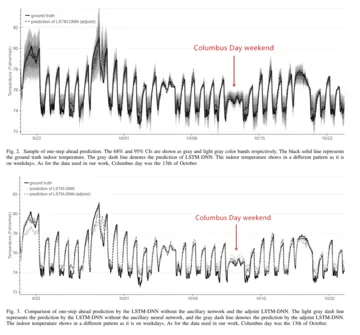 Using an Ancillary Neural Network to Capture Weekends and Holidays in an Adjoint Neural Network Architecture for Intelligent Building ManagementZhicheng Ding, Mehmet Kerem Turkcan, and Albert BoulangerarXiv preprint arXiv:1902.06778, 2018
@article{ding2018using, title = {Using an Ancillary Neural Network to Capture Weekends and Holidays in an Adjoint Neural Network Architecture for Intelligent Building Management}, author = {Ding, Zhicheng and Turkcan, Mehmet Kerem and Boulanger, Albert}, journal = {arXiv preprint arXiv:1902.06778}, doi = {10.48550/arXiv.1902.06778}, year = {2018} }
2015
-
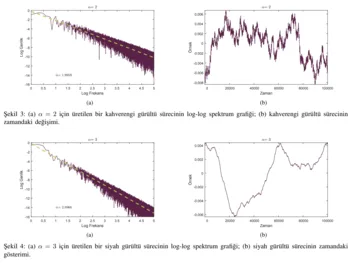 Generation of 1/f\^ alpha Noise via Frequency ScalingMehmet Kerem Turkcan, and Tayfun AkgülEMO Bilimsel Dergi, 2015
@article{turkcan20151, title = {Generation of 1/f\^{} alpha Noise via Frequency Scaling}, author = {Turkcan, Mehmet Kerem and Akg{\"u}l, Tayfun}, journal = {EMO Bilimsel Dergi}, volume = {4}, number = {8}, pages = {41--46}, year = {2015}, publisher = {TMMOB Elektrik M{\"u}hendisleri Odas{\i}}, url = {https://dergipark.org.tr/en/download/article-file/63864}, }