Mehmet Kerem Turkcan
Associate Research Scientist in Civil Engineering & Engineering Mechanics at Columbia University
I build and deploy AI systems for settings where latency, reliability, and real-world context matter, from city streets and surgical training workflows to complex scientific data. Across these domains, my work turns deep learning research into practical computer vision, multimodal, and data systems that can be tested outside the lab.
At the Center for Smart Streetscapes (CS3) and Civil Engineering & Engineering Mechanics at Columbia University, I lead machine learning efforts that move from research prototypes to fielded systems, including real-time video analytics, open-vocabulary perception, edge and vision-language model workflows, street-scale data pipelines, synthetic data generation, urban digital twins, and foundation model workflows for medical robotics.
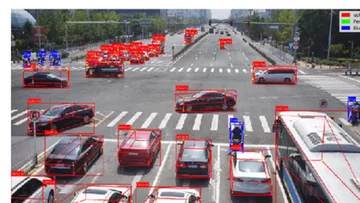
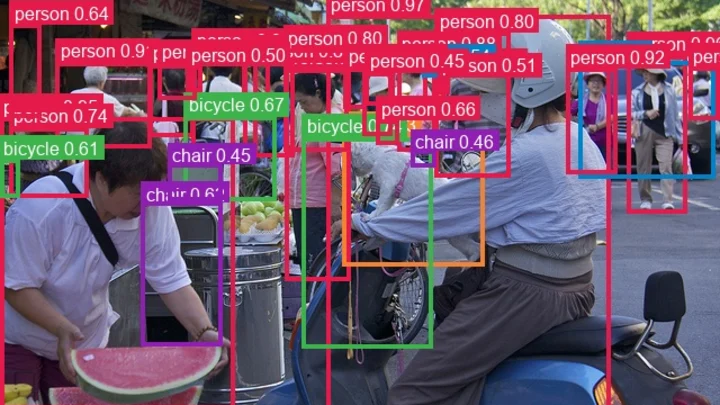 DART Open-vocabulary detection at deployment speed
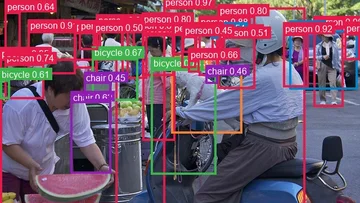
 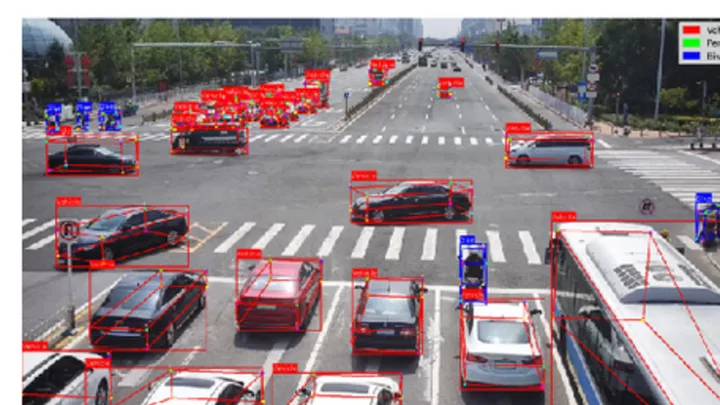 UrbanOmniDetect View-agnostic urban detection
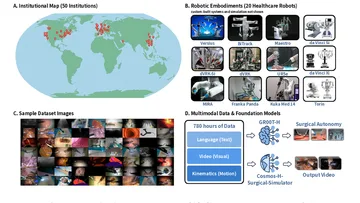
 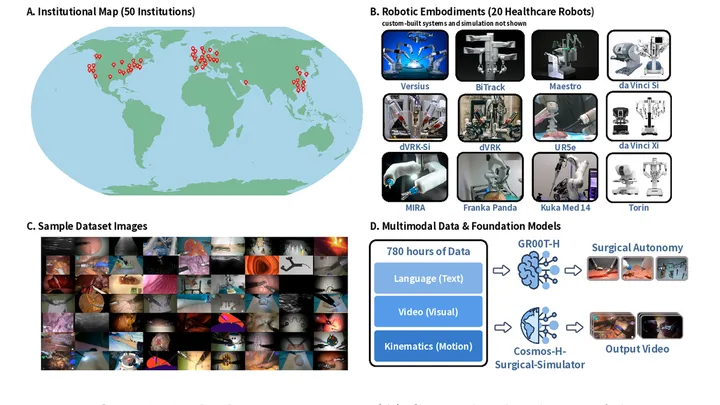 Medical Robotics Open datasets and world models for training
 Work and leadership
- Fielded AI systems: I lead multimodal perception projects for sensing models intended to scale across 900+ New York City intersections and CS3’s three urban testbeds: COSMOS PAWR in New York City, DataCity in New Brunswick, and FAU MobIntel in West Palm Beach.
- Work at leading venues: Publications and preprints across CVPR, ICML, ACM UIST, ACM/IEEE SEC, IEEE INFOCOM, IEEE PerCom, EDM, eLife, and medical AI venues.
- Open-source systems: Public AI systems including DART and generative-agents, with 1,200+ combined GitHub stars.
- Sponsored research: Proposal development, technical reporting, sponsor reviews, and engineering delivery across approximately $30M in institutional research supported by NSF, DARPA, AFOSR, and Con Edison, with additional project support from NVIDIA and EmpireAI.
- Teaching and mentorship: Graduate deep learning courses at Columbia, mentoring of Master’s and high school researchers, and service as the main engineering instructor for the CS3 Research Experience for Teachers in 2024, 2025, and 2026.
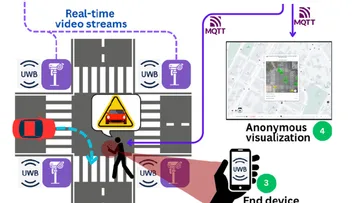
My current systems include DART for real-time open-vocabulary detection, UrbanOmniDetect and UrbanOmniView for calibration-free monocular 3D perception, PAVE and bikeped for urban safety, city-scale traffic analysis, Loom for analytical neural computing, and world models and open datasets for medical robotics.
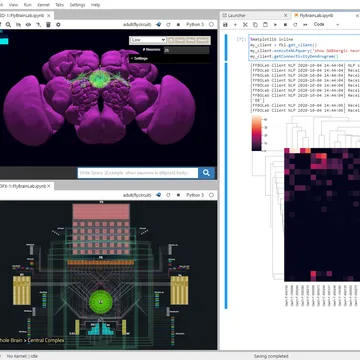
Earlier work on language systems includes GPTune, a GPT-2 fine-tuning toolkit from the early public LLM era, and FlyBrainLab, an early prototype of today’s research-oriented AI workbenches. FlyBrainLab’s natural language interface coordinated access to papers, programmable ontologies, and an OrientDB-backed connectome knowledge graph, linking retrieved evidence to large-scale queries, GPU simulation, and interactive 3D visualization. Although it predated general-purpose LLMs, the platform addressed the grounding, retrieval, tool integration, and provenance problems now central to agentic scientific systems.
My independent game and film work also feeds back into my research practice. Through Wisedawn and KEDIKAT, I work with real-time engines, visual storytelling, and production constraints that inform simulation work such as Boundless. KEDIKAT’s film FLEA received four festival accolades in 2026, including Best Storytelling Runner-Up at the MetaMorph AI Award.
News
| Jul 10, 2026 | Our paper, Digital Eyes on the Road: Using Street Cameras to Verify Traffic Integrity and Detect Sybil Attacks at City Scale, will appear at USENIX VehicleSec 2026. A public preprint is available for download. |
|---|---|
| Jul 2, 2026 | I will head the engineering curriculum for the Center for Smart Streetscapes (CS3) Research Experience for Teachers program in 2026, continuing my role as its main engineering instructor for a third year. |
| Jun 26, 2026 | KEDIKAT’s film FLEA has received several festival accolades, including Best Storytelling Runner-Up at the MetaMorph AI Award 2026. |
| Jun 8, 2026 | Our UrbanOmniDetect paper is now available in the CVPR 2026 Workshops Open Access proceedings. |
| May 18, 2026 | Our paper, Worst-Case Attacks in Reactive Edge-Cloud Systems: Expected Latency and SLA Violation, appeared at IEEE INFOCOM 2026. The DOI is available online. |
| May 1, 2026 | At the annual NSF site visit for the Center for Smart Streetscapes on May 12-15, I presented several applied AI demonstrations, including DART and UrbanOmniDetect. |
| Apr 30, 2026 | Our paper, Calibration-Free View-Agnostic Monocular 3D Object Detection for Urban Scenes, has been accepted to the CVPR 2026 DriveX Workshop as an oral presentation. |
| Apr 22, 2026 | Our Open-H-Embodiment dataset paper for medical robotics foundation models is now available on arXiv. |